
Equity: Meaning, How It Works, and How to Calculate It
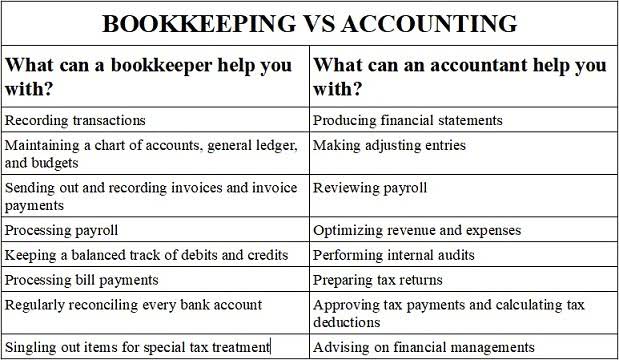
In double-entry accounting or bookkeeping, total debits on the left side must equal total credits on the right side. As a result of how each recorded accounting transaction affects the general ledger with balanced debits and credits, the financial statements are in balance. The purpose of the accounting equation is that it lays the framework for the accounting processes and ensures integrity in financial transaction recording. It plays a crucial role in preparing financial statements that enables analyzing a firm’s financial health while ensuring transparency in accounting processes. The value available to common shareholders divided by the total number of outstanding shares in a corporation is known as book value per share (BVPS). Total equity less preferred equity divided by the number of outstanding shares is the BVPS formula.

How often do companies calculate total liabilities and equity?

Shares bought back by companies become treasury shares, and their dollar value is noted in the treasury stock contra account. While the above definition provides a quick snapshot of total equity, let’s delve into a more detailed discussion. Total equity, often referred to as shareholders’ equity or stockholders’ equity, is a measure of a company’s net value. It is the amount of money that would be left if a company sold all of its assets and paid off all of its liabilities.
Low Shareholder’s Equity: What Does It Mean?
A higher equity position indicates that the company has a strong financial foundation and is total equity formula better able to weather any financial challenges. Secondly, equity represents the owners’ investment in the business and serves as a source of capital for the company’s operations and growth. Finally, equity provides a return on investment to shareholders through dividends and capital appreciation. Total equity represents the cornerstone of a company’s financial standing, reflecting the owners’ residual interest in its assets after deducting liabilities.
- This relationship ensures that every dollar of the company’s assets is accounted for either as a liability (debts owed) or equity (the owners’ residual interest).
- Any discrepancies between recorded assets and the sum of equity and liabilities signal an anomaly and a need for corrections in account balances.
- Treasury stock reduces total equity as it represents shares repurchased by the company, reducing the overall ownership interest.
- Equity is an important concept in finance that has different specific meanings depending on the context.
- These premiums correspond to the surplus of the share price of new shares over the nominal value of the shares or corporate rights granted to the contributor in mergers and acquisitions.
- Bench simplifies your small business accounting by combining intuitive software that automates the busywork with real, professional human support.
Shareholder’s Equity: Formula with Examples
- The share capital represents contributions from stockholders gathered through the issuance of shares.
- It represents the difference between total assets and total liabilities.
- You can calculate shareholders’ equity using the basic Accounting Equation or the Investor’s Equation.
- Equity for shareholders decreases when fewer shares are outstanding.
- Say that you have a choice to invest in a company and want to check out its return on equity before making a decision.
- You’ll find that this method combines the financial statements of both entities, providing a thorough view of the parent company’s financial health.
- Investors usually seek out equity investments as they provide a greater opportunity to share in the profits and growth of a firm.
Companies fund income summary their capital purchases with equity and borrowed capital. The equity capital/stockholders’ equity can also be viewed as a company’s net assets. You can calculate this by subtracting the total assets from the total liabilities. Return on equity is a measure that analysts use to determine how effectively a company uses equity to generate a profit.
Payable
- Total liabilities and equity represent how those assets are financed.
- Consistent financial recordkeeping lays the groundwork for effective equity analysis and reporting.
- They are things like buildings, machines, and special rights like patents.
- These include accounts payable, which are what companies owe to suppliers.
- When she’s not writing, Barbara likes to research public companies and play Pickleball, Texas Hold ‘em poker, bridge, and Mah Jongg.
- For example, if a company takes on a bank loan to be paid off in 5-years, this account will include the portion of that loan due in the next year.
When used with those tools, investors and potential shareholders can get a more accurate picture of the financial health of almost any enterprise. Financial analysts, accountants and investors will use the shareholder equity formula to perform financial modelling on the future outlook of a company’s financial position. A positive shareholder equity value shows that a company has enough assets on its balance sheet to cover all its debts and liabilities whereas a negative shareholder equity value shows the opposite.

What Is the Formula for Equity?
This total matches the company’s assets, ensuring the balance sheet is balanced. Every company has an equity position based on the difference between the value of its assets and its liabilities. A company’s share price is often considered to be a representation of a firm’s equity position.
These liquid assets include cash, stocks, money owed to you, and goods you’re selling. Big companies often keep a lot of current assets to run smoothly and pay bills on time. Did you know 98% of Fortune 500 companies use the balance sheet equation for accurate financial reports? This key principle is vital for U.S. corporate finance and business accounting basics. Often referred to as paid-in capital, the “Common Stock” line item on the balance sheet consists of all contributions made by the company’s equity shareholders. Aside from stock (common, preferred, and Treasury) components, the SE statement includes retained earnings, unrealized gains https://www.bookstime.com/ and losses, and contributed (additional paid-up) capital.
Double entry system ensures accuracy and completeness in its accounting system. This methodical approach is fundamental to the accounting system’s integrity. In this article, we take a deep dive to understand the core attributes of the accounting equation, its role in day to day transactions and how it plays a crucial role in accurate financial reporting. Current assets are those that can be converted to cash within a year, such as accounts receivable and inventory. Long-term assets are those that can’t be converted to cash or consumed within a year, such as real estate properties, manufacturing plants, equipment, and intangible items, including patents. Unrealized losses, for example, would have to be negative because a company’s stock value cannot fall below zero.